
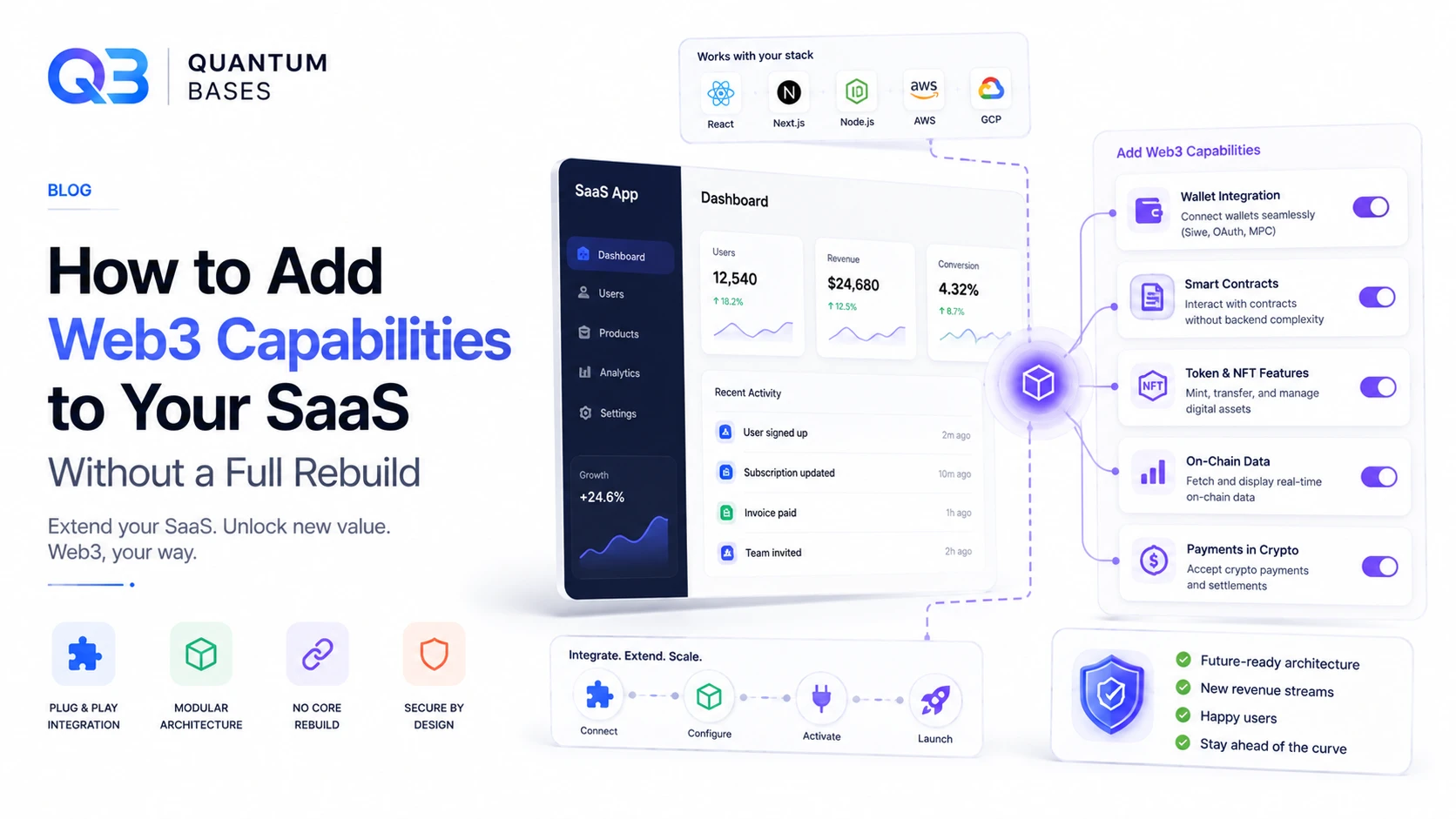
The Web3 Pivot Myth
Many founders believe that entering the Web3 space requires tearing down their existing PostgreSQL/Node.js stack and rebuilding everything as a decentralized, smart-contract-based dApp.
This is a massive, expensive mistake.
In reality, 95% of the value of Web3 (crypto payments, NFT token-gating, verifiable credentials) can be seamlessly integrated into a traditional Web2 architecture. You don't need to rebuild; you just need to bridge.
Integration 1: Wallet Authentication (Sign-In with Ethereum)
The easiest win is replacing or augmenting traditional email/password login with Wallet Authentication (SIWE - EIP-4361).
Instead of storing passwords, you prompt the user to sign a cryptographically secure message using their MetaMask or Phantom wallet.
How to implement it:
nonce.You are now interacting with Web3 users, but your backend routing and session management remain exactly the same as before.
Integration 2: Token-Gating Content
If you run a SaaS, community, or media platform, you might want to offer premium features to users who hold a specific NFT or a certain amount of ERC-20 tokens.
You do not need to move your content on-chain.
How to implement it:
Once the user is authenticated via SIWE, your traditional backend makes an RPC call to the blockchain (using a provider like Alchemy or Infura):
const balance = await contract.balanceOf(userWalletAddress);
if (balance > 0) {
  // Grant premium access in your PostgreSQL database
  await db.users.update(userId, { tier: 'premium' });
}
The logic is executed centrally, which means it is lightning-fast and costs zero gas fees for the user.
Integration 3: Accepting Crypto Payments
If you want to accept USDC or USDT for SaaS subscriptions, you don't need to write custom Solidity contracts.
You can use infrastructure providers like Request Network, Coinbase Commerce, or Stripe's new crypto integrations. These services generate unique deposit addresses, monitor the blockchain for confirmations, and trigger a standard Webhook to your backend once the payment settles.
Your backend listens for the webhook and upgrades the user's account — exactly the same way you handle traditional Stripe credit card webhooks.
The Hybrid Future
The most successful Web3 products are "Web2.5". They use the blockchain strictly for what it is good for (identity, scarcity, and borderless payments) and use traditional Web2 infrastructure for everything else (speed, cheap storage, and complex logic). At Quantum Bases, this hybrid approach is how we get our clients to market in weeks, not years.